Introduction: When Poor Hygiene Becomes a Business Risk
Every year, thousands of businesses face preventable crises — food contamination outbreaks in kitchens, hospital-acquired infections, pest infestations in hotels, and regulatory shutdowns of food processing plants. The common thread in nearly every case? Inadequate professional cleaning protocols and the wrong cleaning products for the job.
The scale of the problem is significant. The World Health Organization estimates that healthcare-associated infections affect 7 in every 100 patients in high-income countries — rising to 15 in 100 in low-income settings. In the food industry, contaminated surfaces cause an estimated 600 million cases of foodborne illness globally each year (WHO). These are not just health statistics. They are business liabilities, reputational risks, and legal exposures.
The solution is structured, professional-grade hygiene management. Choosing the right bulk cleaning chemicals supplier — one that understands your industry, your surfaces, and your compliance obligations — is the foundation of any effective facility hygiene programme. This guide explains everything procurement managers, facility managers, and hospitality operators need to know about commercial cleaning chemicals, from product types to application strategies.
Industrial Hygiene Insights: The Numbers Behind the Risk
Industrial Hygiene — Key Statistics
- Healthcare-associated infections affect 7 in 100 patients in high-income countries and up to 15 in 100 in low-income settings. (WHO)
- Contaminated surfaces are responsible for an estimated 600 million foodborne illness cases globally each year. (WHO, 2022)
- The global commercial cleaning chemicals market was valued at USD 52.3 billion in 2023 and is projected to reach USD 78.6 billion by 2030. (Grand View Research)
- Studies show that 80% of common infections are spread by hands — making hand hygiene one of the highest-ROI investments in any facility. (CDC)
- Facilities using professionally formulated cleaning chemicals report up to 60% fewer hygiene-related compliance failures compared to those using generic products. (British Institute of Cleaning Science)
- The hospitality industry alone accounts for over 12% of global commercial cleaning chemical consumption. (Statista)
- Proper surface disinfection in hospitals can reduce healthcare-associated infection rates by up to 30%. (The Lancet Infectious Diseases)
Cleaning Challenges Facing Modern Facilities
Understanding why professional-grade cleaning chemicals are necessary begins with understanding the challenges that generic products consistently fail to address.
-Grease, Oil & Stubborn Organic Residue
Commercial kitchens accumulate industrial-grade grease deposits on surfaces, extraction systems, and cooking equipment. Standard household degreasers lack the alkaline concentration and surfactant strength needed to break down these deposits efficiently. Left untreated, grease buildup becomes a fire hazard, a pest attraction point, and a violation of food safety standards.
-Bacterial Contamination & Cross-Infection Risk
In hospitals, food processing plants, and childcare facilities, the stakes of surface contamination are directly tied to human health outcomes. Many commercial environments now face the added challenge of antibiotic-resistant organisms such as MRSA and C. difficile, which require specific biocidal formulations at correct concentrations — not general-purpose sprays.
-Persistent Malodours
Drains, waste areas, toilets, and high-traffic corridors in hotels, hospitals, and offices generate odours that simple air fresheners cannot address. Effective odour management requires enzyme-based or bacteria-consuming formulations that eliminate the source of malodour rather than merely masking it.
-Scale, Limescale & Mineral Deposits
In hard-water regions, limescale accumulates rapidly on bathroom fixtures, kitchen equipment, boilers, and cooling systems. Removing it requires acidic descaling agents at controlled concentrations — strong enough to dissolve mineral deposits without damaging surfaces or equipment.
-Inadequate or Mismatched Products
One of the most common and costly facility hygiene mistakes is using the wrong chemical for the task. Diluting a product too heavily to reduce cost reduces efficacy below useful thresholds. Using a food service disinfectant in an industrial setting, or vice versa, may result in compliance failures or surface damage. The right professional cleaning solutions for businesses must match the application precisely.
What Are Commercial Cleaning Chemicals?
✦ Featured Snippet Answer Commercial cleaning chemicals are professional-grade formulations manufactured for use in facilities, institutions, and industrial environments. Unlike household products, they are highly concentrated, fast-acting, and specifically designed for large-scale, frequent-use applications in sectors such as hospitality, healthcare, food service, and manufacturing. |
The term covers a broad spectrum of products: degreasers, disinfectants, descalers, laundry chemicals, floor treatments, hand sanitisers, and air care solutions. What distinguishes them from retail products is concentration, formulation precision, regulatory compliance, and application specificity.
When sourced from a qualified bulk sanitation chemicals exporter or manufacturer such as Kleanfix Industries, these products also come with Safety Data Sheets (SDS), application guidelines, and technical support — the infrastructure that responsible facility hygiene management demands.
Types of Commercial Cleaning Chemicals: A Complete Overview
 1.Kitchen & Food Service Degreasers
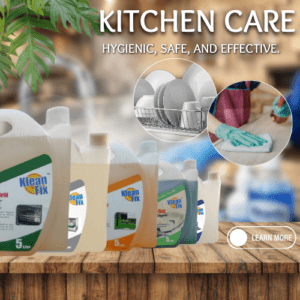
Formulated to cut through accumulated cooking grease, carbonised deposits, and food residue on surfaces, equipment, and extraction systems. High-alkaline kitchen degreasers are essential for commercial kitchens, catering operations, and food manufacturing plants.
– Applications: Hobs, fryers, extraction hoods, oven interiors, food prep surfaces
-Key chemistry: High-alkaline surfactant blends, enzymatic additives
-Safety note: Must be food-safe rated where used on food-contact surfaces

2. Surface Disinfectants & Sanitisers
The cornerstone of any commercial sanitation chemicals programme. Surface disinfectants kill bacteria, viruses, and fungi to safe levels — essential in healthcare, hospitality, and food environments where cross-contamination risk is highest.
– Applications: High-touch surfaces, patient rooms, food prep counters, toilet facilities
– Key chemistry: Quaternary ammonium compounds (QUATs), chlorine-based, hydrogen peroxide blends
– Compliance: Must meet EN 1276 (bacteria), EN 14476 (viruses) or equivalent standards

3.Floor Cleaners & Maintainers
Floor care is the highest-visibility element of any facility hygiene programme. Professional floor cleaning chemicals are formulated to clean, protect, and maintain specific floor types — vinyl, marble, ceramic, concrete, and hardwood — without damaging seals or finishes.
– Applications: Lobbies, corridors, production floors, kitchens, washrooms
– Key chemistry: Non-ionic surfactants, pH-neutral or alkaline depending on soil type
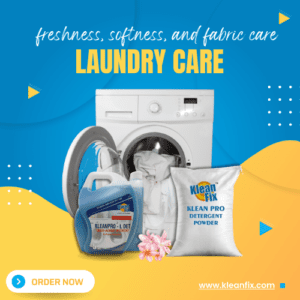
4. Laundry Chemicals
Hotels, hospitals, and laundry service businesses require bulk laundry care solutions that deliver consistent stain removal, whitening, fabric conditioning, and microbial control across high-volume wash cycles. Key products include detergents, stain removers, bleach systems, fabric softeners, and sour neutralisers.
– Applications: Bed linen, towels, uniforms, healthcare garments, F&B textiles
– Key chemistry: Anionic surfactants, optical brighteners, oxygen or chlorine bleach systems
5. Toilet, Drain & Descaling Chemicals
Acidic formulations for removing limescale, mineral deposits, and organic matter from sanitary ware, drains, pipes, and water-contact equipment. Enzyme-based drain treatments offer a safer, preventative alternative to caustic drain unblockers in facilities with frequent use.
– Applications: WCs, urinals, washbasins, drains, cooling towers, boilers
– Key chemistry: Hydrochloric or phosphoric acid blends, enzyme/bacteria concentrates
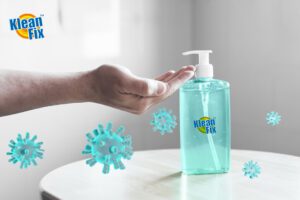
6. Hand Hygiene & Personal Care Products
Hand contamination is the primary transmission route for most facility-borne infections. A complete hand hygiene programme includes hand wash soaps, alcohol-based hand sanitisers, foam dispensers, and skin conditioning products for sustained compliance by staff and visitors.
– Applications: Entry points, washrooms, kitchens, clinical areas, food production lines
– Key chemistry: Ethanol (60–80%), chlorhexidine, benzalkonium chloride, moisturising agents

7. Air Fresheners & Fragrance Solutions
Professional air fresheners and fragrance solutions go beyond masking odour — they eliminate malodour-causing compounds and create a consistent ambient impression in guest-facing or clinical spaces. Kleanfix manufactures a full range of dispensing systems, gel formats, and concentrate solutions for facilities of all sizes.
Comparison: Commercial Cleaning Chemical Types at a Glance
Chemical Type | Primary Use | Best For | Form | pH Range |
|---|---|---|---|---|
Degreaser / Kitchen Cleaner | Remove grease, oil, food residue | Kitchens, food processing plants | Liquid / Gel | Alkaline 9–13 |
Surface Disinfectant | Kill bacteria, viruses, fungi | Hospitals, clinics, food service | Spray / Concentrate | Neutral 6–8 |
Floor Cleaner | Deep clean & sanitise floors | Offices, hospitals, warehouses | Liquid / Powder | Neutral 7 |
Laundry Chemical | Remove stains, sanitise linen | Hotels, hospitals, laundries | Liquid / Powder | Alkaline 9–11 |
Toilet & Drain Cleaner | Remove scale, odours, blockages | Hotels, offices, institutions | Liquid / Gel | Acidic 1–4 |
Hand Hygiene / Sanitiser | Kill pathogens on hands | All facilities, food handling | Gel / Foam / Liquid | Neutral 6–7 |
Air Freshener / Odour Control | Eliminate malodours, freshen air | Hotels, hospitals, offices | Spray / Gel / Diffuser | Neutral |
Heavy-Duty Industrial Cleaner | Remove industrial grime & deposits | Factories, plants, workshops | Concentrate | Alkaline 11–14 |
Selecting the right chemical type for each surface and application is critical to both hygiene efficacy and cost efficiency. Mismatched products are one of the leading causes of compliance failures in commercial facilities.
How to Choose the Right Cleaning Chemical for Your Facility
No two facilities are identical — and neither should their cleaning programmes be. Here is a structured approach to selecting the right professional cleaning solutions for businesses:
- Identify the soil type — grease, bacteria, scale, odour, or general dirt. The nature of the contaminant determines the chemistry required.
- Assess the surface material — marble, stainless steel, vinyl, and porous surfaces each have different chemical tolerances. Alkaline products can damage marble; acidic products can corrode steel.
- Consider the use environment — food areas require food-safe, rinsable products. Healthcare areas require broad-spectrum biocidal activity. Guest-facing areas benefit from pleasant fragrance profiles.
- Check regulatory and compliance requirements — food businesses, hospitals, and exporters operate under specific hygiene standards that mandate the use of approved or certified chemical products.
- Evaluate concentration and dilution ratios — highly concentrated chemicals may appear more expensive per litre but often deliver lower cost-in-use when diluted correctly. Request SDS and dilution guidance from your supplier.
- Request technical support — a qualified bulk cleaning chemicals supplier should provide application training, usage audits, and product rationalisation guidance, not just product delivery.
Industry Use Cases: Where Professional Cleaning Chemicals Deliver Results
– Hotels & Hospitality
Hotels manage a comprehensive daily cleaning cycle across hundreds of rooms, restaurant kitchens, laundry operations, lobbies, and pool areas. Key products include room surface disinfectants, bathroom descalers, laundry detergents, kitchen degreasers, and fragrance solutions for guest areas. Facility maintenance cleaning products for hospitality must be fast-acting, low-residue, and pleasant-smelling — balancing efficacy with guest experience.
– Hospitals & Healthcare Facilities
Healthcare is the most demanding application for industrial disinfectant solutions. Products must demonstrate validated kill claims against relevant pathogens, comply with infection control policies, and be safe for use around patients and clinical equipment. Kleanfix supplies hospital-grade disinfectants, hand hygiene programmes, and medical laundry chemicals to healthcare institutions.
– Corporate Offices
Office facilities require a workplace hygiene cleaning products programme that covers high-touch surfaces (keyboards, door handles, lift buttons), washrooms, kitchen areas, and common spaces. Post-COVID, the expectation for regular surface disinfection in offices has increased significantly — making professional-grade products a standard procurement requirement.
– Restaurants & Food Service Operations
Food hygiene legislation in most markets mandates specific standards for surface sanitation in commercial kitchens. Restaurant operators need commercial sanitation chemicals that are certified for food contact surfaces, effective against Salmonella and E. coli, and compatible with HACCP food safety management systems.
– Educational Institutions
Schools, universities, and childcare facilities face unique hygiene challenges — high population density, shared surfaces, and vulnerable users. Effective facility cleaning supplies for industries in educational settings prioritise low-toxicity formulations that are safe for children while still providing robust germ control in washrooms, classrooms, and canteens.
– Industrial Plants & Manufacturing
Industrial environments accumulate specialist contaminants: machine oil, metal particles, chemical residue, and industrial grime. Heavy-duty industrial cleaners and degreasers must handle these at scale, often in large floor areas or on expensive equipment, without causing corrosion or leaving harmful residues.
Mini Case Study: How a 5-Star Hotel Chain Reduced Hygiene Incidents by 45%
“We had three back-to-back pest incidents and a food safety notice within six months. It wasn’t a staffing problem — it was a product and protocol problem. Switching to a structured professional cleaning chemicals programme turned that around completely.” — Housekeeping Director, Luxury Hotel Chain, India |
A 5-star hotel group operating across four properties in India was experiencing recurring hygiene compliance issues: persistent kitchen grease complaints during inspections, linen quality deterioration, and guest feedback about bathroom odours. Their procurement team was sourcing cleaning products from multiple vendors with no standardisation.
Kleanfix conducted a full facility hygiene audit across all properties and designed a structured commercial cleaning chemicals programme:
- Standardised kitchen programme: Replaced inconsistent degreasers with a two-stage kitchen cleaning protocol using Kleanfix alkaline degreaser and food-safe surface sanitiser.
- Laundry rationalisation: Switched to a Kleanfix 4-product laundry system — detergent, bleach, sour, and softener — with correct dosing dispensers to eliminate over/under-use.
- Bathroom odour control: Introduced enzyme-based drain treatment and Kleanfix fragrance diffuser system in guest bathrooms and corridors.
- Hand hygiene compliance: Installed Kleanfix foaming hand wash and sanitiser dispensers at all back-of-house touchpoints, with staff training.
Within six months: hygiene inspection scores improved by 45%, guest complaints about housekeeping fell by 60%, and laundry chemical cost-per-kg dropped by 18% through correct dilution management.
Common Cleaning Mistakes in Commercial Facilities
⚠ Common Cleaning Mistakes to Avoid
- Incorrect dilution — Over-diluting cleaning chemicals to cut costs reduces active ingredient concentration below effective thresholds, resulting in surfaces that appear clean but remain contaminated.
- Using the wrong chemical for the surface — Applying acidic cleaners to marble or alkaline products to aluminium causes irreversible surface damage and significantly increases replacement costs.
- Skipping contact time — Disinfectants require a specified dwell time to achieve their kill claims. Wiping immediately after application renders even the best disinfectant ineffective.
- Mixing incompatible chemicals — Combining bleach-based products with ammonia or acid cleaners produces toxic fumes and can cause serious harm to staff. Chemical storage and handling training is non-negotiable.
- Neglecting high-touch points — Door handles, light switches, lift buttons, and shared equipment are cleaned less frequently than visible surfaces despite carrying the highest cross-contamination risk.
- No cleaning schedule or SOPs — Without documented standard operating procedures, cleaning frequency and chemical usage become inconsistent — creating unpredictable hygiene gaps.
- Purchasing on price alone — Selecting cleaning chemicals based only on unit cost ignores dilution ratio, efficacy, and compliance value. The cheapest product per litre is frequently the most expensive in terms of volume required and risk exposure.
Future Trends in Commercial and Industrial Cleaning (2025 and Beyond)
– Green Chemistry & Biodegradable Formulations
Regulatory pressure and institutional sustainability commitments are driving demand for eco-friendly industrial cleaning chemicals that are biodegradable, low-VOC, and produced from plant-derived actives. This is no longer a niche requirement — it’s becoming standard in procurement specifications for hospitals, schools, and government buildings.
– Automation-Compatible Cleaning Systems
As robotic floor cleaners and automated dosing systems become more accessible to mid-size facilities, the demand for precision-formulated, auto-dosing cleaning chemicals will grow. Chemicals must be compatible with sensor-guided dispensers and deliver consistent performance without manual intervention.
– Advanced Antimicrobial Surface Protection
Beyond standard disinfection, facilities are adopting long-acting antimicrobial surface coatings that provide residual protection between cleaning cycles. These technologies — typically silver-ion or quaternary silane-based — are being deployed in hospitals, airports, and food processing facilities.
– Digital Hygiene Management & IoT Monitoring
Smart dispensers with IoT connectivity allow facility managers to monitor chemical usage, dilution accuracy, and cleaning frequency in real time. This data-driven approach to facility maintenance cleaning products management reduces waste, ensures compliance, and provides auditable records for regulatory inspections.
– Enzyme & Probiotic Cleaning Technologies
Enzyme-based and probiotic cleaning formulations are gaining ground in drain maintenance, odour control, and surface cleaning. These biological approaches offer sustainable, residue-free alternatives to chemical-intensive products — particularly valuable in food service and healthcare environments.
Partner with Kleanfix Industries for Professional Cleaning Solutions
Kleanfix Industries Pvt. Ltd. is a trusted manufacturer and bulk cleaning chemicals supplier serving hotels, hospitals, corporate facilities, food service operations, educational institutions, and industrial plants across India.
Our full product range covers housekeeping chemicals, kitchen degreasers, laundry solutions, facility care products, hand hygiene systems, and air fresheners — all formulated to professional-grade standards with comprehensive SDS documentation and technical support.
Whether you need a customised facility cleaning programme, bulk supply contracts, or private-label chemical solutions, our B2B team is ready to support your requirements.
👉 Visit kleanfix.com or contact our B2B sales team today for a free facility hygiene consultation and customised product quotation.
Conclusion: Professional Cleaning Is a Business Investment, Not a Cost
The gap between a facility that looks clean and one that genuinely is clean comes down to chemistry, protocols, and professionalism. Commercial cleaning chemicals are not a commodity purchase — they are a frontline investment in the health, safety, and reputation of your business.
Whether you manage a 200-bed hospital, a 5-star hotel kitchen, a corporate campus, or an industrial plant, the right bulk cleaning chemicals supplier will reduce your hygiene risk, help you meet compliance obligations, and ultimately deliver a lower true cost of facility management than the false economy of cheap, generic alternatives.
Kleanfix Industries understands the complexity of commercial hygiene at scale. From product formulation to technical support, we’re built to be a long-term partner in your facility’s cleanliness — not just a product vendor.
The cleaner your facility, the stronger your brand. That’s not just good hygiene — it’s good business.
References & Further Reading
- World Health Organization (WHO) — Healthcare-Associated Infections Fact Sheet — who.int
- World Health Organization (WHO) — Food Safety: Foodborne Diseases — who.int
- Grand View Research — Commercial Cleaning Chemicals Market Report 2023–2030 — grandviewresearch.com
- Centers for Disease Control and Prevention (CDC) — Hand Hygiene in Healthcare Settings — cdc.gov
- British Institute of Cleaning Science (BICSc) — Professional Cleaning Standards — bics.org.uk
- The Lancet Infectious Diseases — Surface Disinfection & HAI Reduction Study — thelancet.com
- Statista — Commercial Cleaning Market by Sector — statista.com
Frequently Asked Questions: Commercial Cleaning Chemicals
Ans: Commercial cleaning chemicals are professional-grade formulations designed for high-frequency, large-area use in facilities such as hotels, hospitals, and industrial plants. They are significantly more concentrated, faster-acting, and effective against a broader spectrum of contaminants than standard household cleaning products.
Ans: Sourcing from a bulk cleaning chemicals supplier reduces per-unit cost significantly, ensures consistent product quality across all facility locations, provides access to technical support, and guarantees uninterrupted supply — all critical factors for large institutions managing ongoing hygiene operations.
Ans: Kleanfix Industries manufactures housekeeping chemicals, kitchen degreasers, laundry care solutions, facility care products, floor cleaners, personal and hand hygiene solutions, pet care cleaning products, and air fresheners and fragrance solutions — covering the full spectrum of commercial and industrial hygiene requirements.
Ans: Yes. Kleanfix formulates food-safe cleaning and sanitising solutions specifically for use in kitchens, food processing facilities, and restaurant environments. These products meet relevant hygiene and safety standards for food contact surface sanitation.
Ans: The right product depends on the surface type, the nature of the contaminant (grease, bacteria, scale, odour), the frequency of cleaning required, and any regulatory standards that apply to your industry. Kleanfix technical advisors can assess your facility needs and recommend a customised product range.
Ans: A sanitiser reduces microbial populations on surfaces to levels considered safe by public health standards. A disinfectant destroys a broader spectrum of pathogens, including bacteria, viruses, and fungi. Disinfectants are used where stricter infection control is required, such as in hospitals and healthcare facilities.
Ans: Yes. Kleanfix Industries supplies commercial cleaning chemicals in bulk quantities tailored to institutional and industrial requirements. Custom packaging, private labelling, and contract supply agreements are also available for qualifying B2B clients.
Ans: Store all cleaning chemicals in original, clearly labelled containers in a cool, dry, well-ventilated area away from direct sunlight. Keep acids and alkalis separated. Ensure all storage areas comply with local safety regulations and that staff are trained in correct handling procedures.
Ans: Kleanfix products are manufactured in compliance with applicable Indian and international chemical safety and quality standards. Safety Data Sheets (SDS) are provided with all products, and formulations are tested for efficacy and safety before commercial supply.
Ans: You can contact Kleanfix Industries directly through the website at kleanfix.com, by email, or by phone. The Kleanfix B2B sales team will arrange a facility needs assessment, provide product recommendations, issue a customised quotation, and guide you through the order and delivery process.